Planning a Craft Brewery: What the Manufacturer Expects From You
A brewery project starts moving the day four documents land on the factory's desk: a building you control, a batch size you can sell, a brew method you have chosen, and a budget that covers utilities as well as vessels. Hermann has designed craft brewing equipment for 23 years and has sold in more than seventy countries, and the enquiries that turn into usable proposals are the ones that carry those four answers instead of a single line asking for a price.
What follows is the information a factory actually reads, in the order an engineer asks for it, with one worked example that shows how those answers change the arithmetic.
Key takeaways
- A site answer needs floor area, clear height, floor loading, drainage, and the power and water you can genuinely supply.
- The published size list runs from a 200 L nano set to a 10,000 L system, so batch volume belongs in litres or barrels, never as "small".
- Every shipment passes five inspection steps, and the inspection record travels with the order.
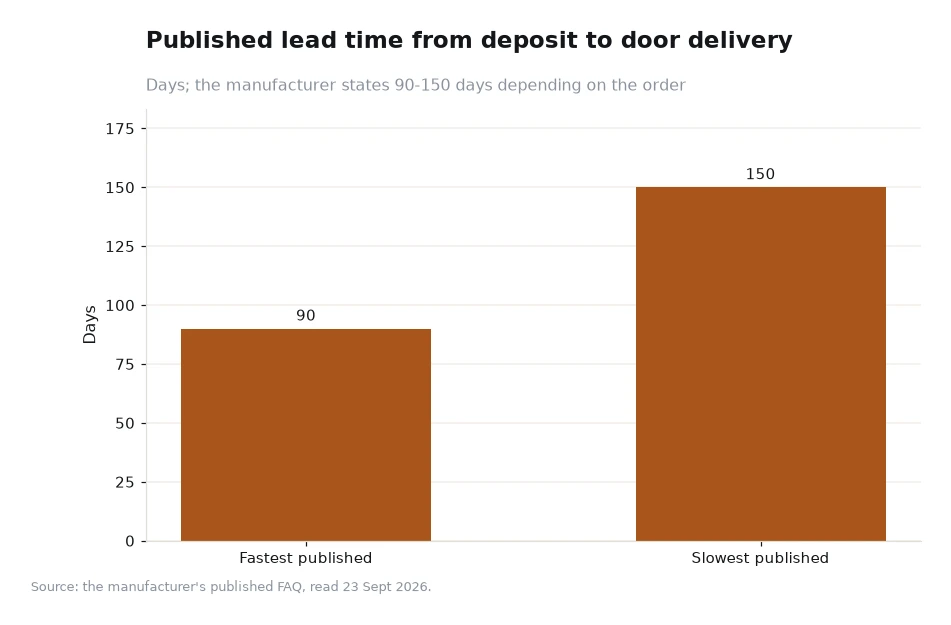
- Plan your opening date on the published window of 90 to 150 days from deposit to door delivery, not on a promise of a shorter one.
The four inputs, in the order an engineer asks for them
The first pass through a brewery enquiry is not a quotation. It is a reading of your message against a design checklist. A factory can size a mash tun, a kettle and a row of fermentation vessels from the batch volume and the number of brews you intend each week. It cannot size the building, because it has never seen it.
If the enquiry says only that you want to open a brewery, the useful reply is a question list, and your project loses a fortnight before design begins. The four inputs are the site and the building, the vessel sizes you can sell, the brewing method you mean to run, and the money available for the whole project rather than for tanks alone. A short paragraph on each is enough to start.
Site and building data the factory cannot guess
Begin with the plan: total floor area, clear internal height, and the route a truck takes to the door where the equipment will be unloaded. Vessels travel in wooden boxes and arrive with a checking list, so somebody has to move crates from the trailer to their final position. That usually means a forklift, a level slab and a doorway wide enough for the largest vessel rather than for the smallest.
Then the services. State the electrical supply you can bring to the control panel, the water volume and pressure available in a working day, the drainage points, and whether you are allowed to install a boiler or must run an electric or direct-fire brewhouse instead. Floor loading starts to matter above roughly 1,000 L, because a full vessel plus its jacket water weighs considerably more than the drawings suggest once it is standing on the mezzanine you sketched.
Say whether the building is leased and for how long. A design that assumes a permanent steam plant is the wrong answer if the lease ends in four years and the landlord will not renew. Waste water is part of the same conversation: a brewery that will discharge cleaning chemicals needs a plan for neutralising them before they reach the drain.
Batch size, brew method and the published size list
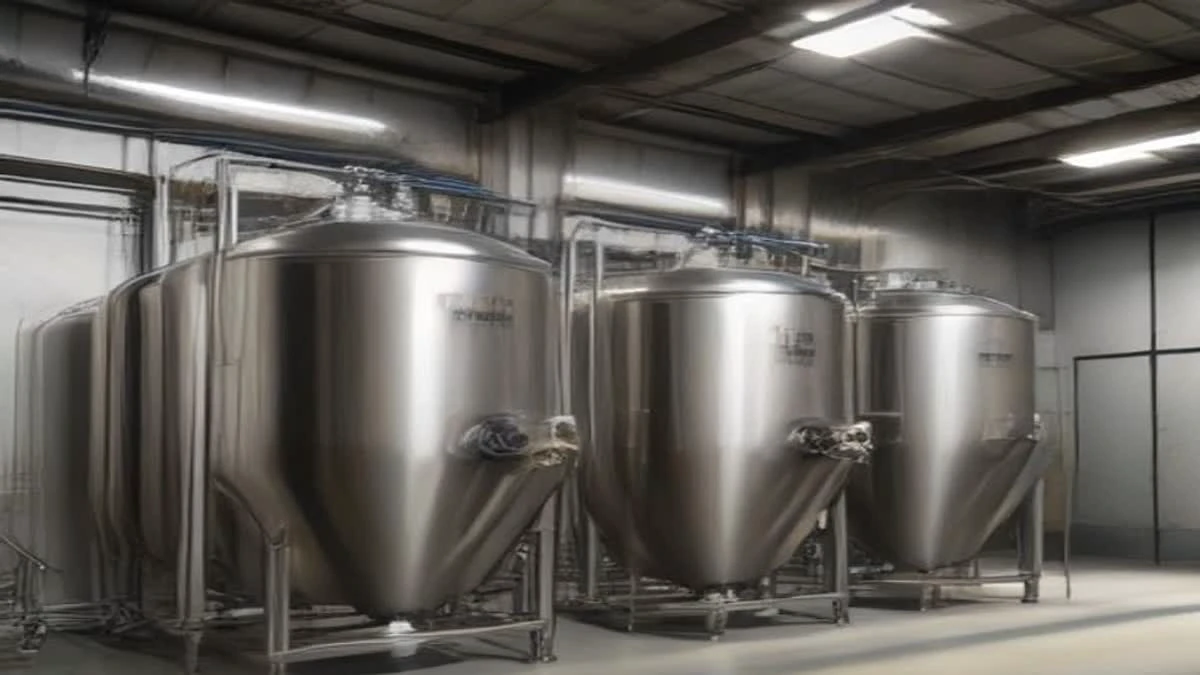
Give the batch volume in litres or barrels and add how many brews you expect per week. The published range moves from a 200 L nano set through 300 L and 500 L microbrewery kits, 1,000 L in two, three or four-vessel form, 2,000 L, 2,500 L, 3,000 L, 5,000 L and 10,000 L systems, so most serious enquiries map onto one of those classes. The published hem beer equipment list is a sensible place to find the class that matches your target output before you write anything down.
Brew method decides the vessel count. A single infusion schedule can live in a two-vessel set, while step mashing and a separate whirlpool push the same batch volume into three or four vessels and buy back time on brew day. Say whether you want yeast enlargement, filtration, CIP cleaning and filling in the same order, because those choices change the pipework, the platform and the electrical load together rather than one at a time.
Budget, utilities, and the gap between a tank price and a project price
Send a budget band, not a target number you are hoping to hear repeated. A published example of a complete 10 BBL system, roughly 1,174 litres, sits in a range of about US$75,000 to US$200,000, and the note attached to that figure is the important part: valves, pipes, a steam boiler and other site requirements move it. Treat the range as the shape of a project budget in which the vessels are the middle, not the whole.
Finally, ask what a proposal includes. Platform, piping, pumps, the plate heat exchanger, the glycol chiller, the control cabinet and the training visit are all items that can sit inside a scope or outside it, and comparing two proposals is only possible when both list them.
| Input | What the factory does with it | A usable answer looks like |
|---|---|---|
| Floor plan and height | Fixes vessel layout, platform height and pipe runs | A dimensioned drawing with ceiling height and door widths |
| Batch size and brews per week | Sizes the brewhouse, tank farm and cooling load | 1,000 L batches, six brews a week, four fermenters |
| Brew method | Chooses two, three or four vessels and the mash schedule | Infusion or step mash, plus a separate whirlpool or not |
| Utilities | Decides steam, direct fire or electric heating | Supply size, water per day, drainage, boiler space |
| Budget band | Sets inclusions and the order of construction | A range, plus what is already on site |
Worked example: what a 1,000 L brewhouse can sell
The assumptions here are mine and are stated so you can replace them: one 1,000 L brewhouse, 1 BBL counted as about 117 L, four fermentation vessels of 1,000 L each, a 21-day tank cycle of 14 days fermentation plus 7 days conditioning, and 8 per cent loss across transfer and packaging.
Step one, batch size in barrels: 1,000 divided by 117 is about 8.5 BBL per brew. Step two, cycles per tank each month: 30 divided by 21 is about 1.43. Step three, brews per month: four tanks multiplied by 1.43 is about 5.7, so six brews once the schedule is rounded to whole days. Step four, gross volume: six brews multiplied by 1,000 L is 6,000 L, or roughly 51 BBL.
Step five, saleable volume after losses: 6,000 L multiplied by 0.92 is 5,520 L, about 47 BBL, or roughly 55 hectolitres at 100 L to the hectolitre. So a 1,000 L brewhouse with four matching tanks, on this schedule, supports about 5,500 litres of beer for sale each month. If your tasting room moves 1,200 L of that and the remainder leaves in kegs, the plan holds together. If you need 15,000 L a month from the same footprint, the site and the tank farm are the wrong size, and no change to the invoice will fix that.
Frequently asked questions
What should a buyer prepare before contacting a brewery equipment manufacturer?
A dimensioned site plan, the batch size and number of brews per week you plan, your brewing method, and a budget band that includes utilities, freight and installation. The manufacturer publishes its size list from 200 L to 10,000 L, so the enquiry should name the size class you are targeting instead of asking for a generic price.
What happens between placing an order and taking delivery?
Design work, production and five inspection steps follow: materials checking, production process, jacket pressure testing, packing and loading inspection, and a finished-product leak test. Each tank carries a data plate with its pressure-testing record and serial number, and the published lead time from deposit to door delivery is 90 to 150 days depending on the order.
Next step: send a plan, not a wish
Write the four inputs onto one page, attach the floor plan, and send it with the output you need each month. The company's About Us page explains the turnkey approach from business plan to brew, and the practical details of delivery and installation can be settled once the size class is fixed. If a detail is still open, the team's Contact Us page is the shortest route to an answer. You will get a design proposal you can actually compare against another supplier, which is the whole point of putting the numbers down first.
Figures and product sizes in this article come from the manufacturer's own website, read 23 Sept 2026; the 5,500 L monthly output is my own worked arithmetic and not a published figure.[1] The 90 to 150 day delivery window is the manufacturer's published condition and varies with the order.