A useful container loading record connects the approved order to the cargo that actually enters the container. Record container and seal identity, visible condition, carton counts, loading sequence, stowage observations, and exceptions while the work is taking place. Use dated photographs and a signed checklist, then reconcile the record with packing documents before closing the shipment. Loading supervision documents observations; it does not replace carrier, customs, safety, or shipper responsibilities.
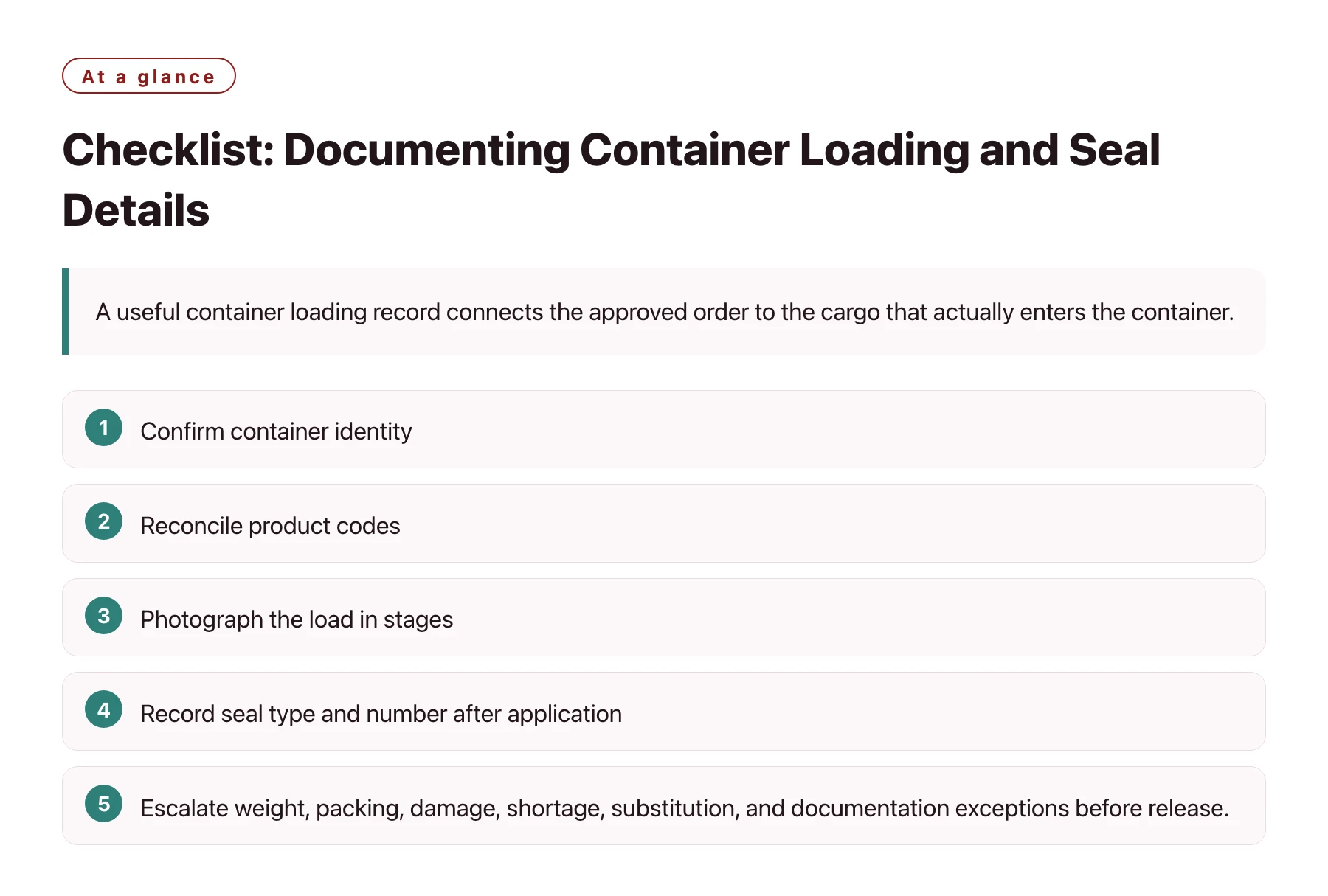
Key takeawaysConfirm container identity, cleanliness, damage, odor, dryness, and door condition before loading. · Reconcile product codes, packages, quantities, and labels against the approved packing list. · Photograph the load in stages, including the final cargo arrangement and closed doors. · Record seal type and number after application, then compare it with shipping documents. · Escalate weight, packing, damage, shortage, substitution, and documentation exceptions before release.
Agree the checklist, acceptance criteria, responsible contacts, and stop-work triggers before the container arrives.
1. Set up the loading record
Create a shipment cover sheet with purchase order, supplier, factory, product groups, planned quantity, container booking, loading address, inspection date, and observer. Identify who represents the shipper, who directs loading, who checks documents, and who can authorize a hold or deviation. Include a contact route for urgent questions and a space to record the time each issue was raised and resolved.
Prepare the latest approved packing list, carton marks, loading plan, product approvals, and any special handling instructions. Note document revisions so outdated copies are not used on site. The record should distinguish a direct observation from a supplier statement or a document claim. That distinction makes later reconciliation more useful when a quantity or condition differs from plan.
2. Inspect container identity and condition
Before loading starts, photograph the container number on the exterior and compare it with the booking and loading instruction. Check accessible panels, roof, floor, doors, locking bars, and gasket condition for visible damage, holes, water ingress, residue, odor, pests, or contamination that could affect the cargo. Record any limitation where a surface could not be inspected. Do not enter a container or climb on equipment unless the site has authorized a safe method.
If a defect could expose goods to water, contamination, theft, or structural movement, notify the responsible shipper or forwarder and obtain a disposition before loading. Record the proposed remedy and approval. An observer should document what was seen and who made the decision rather than make an engineering determination outside their role. [1]
3. Reconcile goods before they cross the door
Check the product description, model or SKU, package marks, quantities, and visible condition against the packing list and approved order. Count by the agreed unit: cartons, pallets, bundles, or pieces. If packaging hides the contents, state that the identity was checked from marks or documents rather than implying that each item was opened. Sample checks should follow a defined plan and record the selection basis.
Keep a running load tally by item and package count. Mark shortages, excess, mixed models, damaged cartons, relabeling, and substituted goods as exceptions with photographs and references. Ask the supplier to pause the affected group if its identity or disposition is unclear. Resolve whether the goods will be corrected, excluded, reworked, or approved as a documented deviation before the container is sealed.
4. Observe loading sequence and stowage
Record the loading start and finish times, the loading sequence, and the number of packages placed inside. Photograph the container empty, each major stage, blocking or securing where visible, and the final arrangement before the doors close. Check that the observed configuration generally follows the approved plan and that labels remain traceable where they can be seen. Note obvious concentrated loads, unstable stacks, damaged pallets, loose voids, or packages that could shift.
The IMO, ILO, and UNECE CTU Code provides guidance on packing and securing cargo transport units across transport modes. Use the agreed packing plan and qualified personnel for technical stowage decisions; the observer should record deviations and request review when a safety concern appears. Do not rearrange cargo or direct lifting operations unless trained and authorized to do so. [1]
5. Check weight and shipping information
Confirm which party prepares the verified gross mass information and how it will reach the carrier and terminal in time for vessel planning. Match the container number and shipment reference across the loading record, shipping instruction, packing list, and weight document. If a value is missing or inconsistent, raise it for correction rather than estimating or changing it at the loading site.
IMO explains that SOLAS requires a verified gross mass for a packed container and places responsibility on the shipper to provide that information in the shipping document sufficiently in advance for planning; the verified gross mass is a condition for ship loading. The observer’s checklist can record document status, but the responsible parties must follow applicable requirements and approved weighing methods. [2]
6. Record the seal and close the load
After final reconciliation, record the seal type, unique seal number, who applied it, and the date and local time. Photograph the number legibly at the door and the closed container exterior. Compare the seal number with the shipping instruction or other required record before the container leaves the loading point. If the seal is damaged, replaced, or different from the document, record both old and new numbers and the authorized reason.
Use a consistent handoff record with container number, seal number, final package totals, open exceptions, and the names or roles of people who acknowledged the handoff. Avoid relying on a photograph alone when required documents need a typed number. Store image filenames or links beside the checklist so another reviewer can locate the evidence without sorting through an unlabelled camera roll.
7. Close exceptions and issue the report
For each exception, write the affected item or package, what was observed, evidence reference, person notified, required decision, and final disposition. Keep unresolved issues visibly open. If approval depends on a revised packing list, corrected mark, replacement goods, or additional weight information, attach the final version and show when it was received. A report that says only “loading completed” cannot explain whether the shipment matched the approved order.
Before release, reconcile the final count, packing list, loading photographs, container number, seal number, and required shipping records. Deliver the report promptly to the designated buyer and logistics contacts. Buyers arranging cargo loading supervision can use one checklist across suppliers, while retaining shipment-specific photos, counts, and approvals for each container.
Sources
Frequently asked questions
Which photos should a container loading report include?
Capture the container number, interior condition before loading, visible package marks, staged loading, final stowage, sealed doors, and readable seal number. Label each image with shipment and time.
Should loading continue if the seal number differs from the documents?
Pause the handoff and notify the responsible shipper or logistics contact. Record the observed number, prior documented number, reason for any replacement, and approved correction before release.
Does loading supervision verify the container gross mass?
Not automatically. Record whether the required verified gross mass document is present and matched, while leaving weighing and formal submission to the responsible shipper and approved parties.
What should happen when the packing list and carton count disagree?
Identify the affected product and quantity, preserve evidence, notify the owner, and obtain a corrected document or written disposition. Keep the discrepancy open until the shipment record matches the agreed outcome.